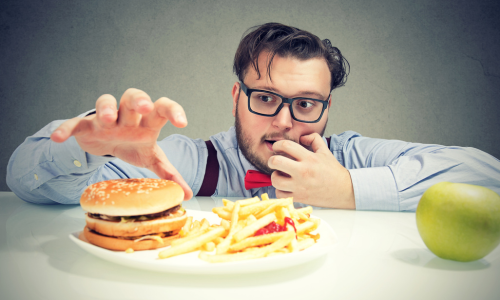
De wetenschap achter het beheersen van cravings is zowel fascinerend als complex. Het omvat een samenspel van fysiologische, psychologische en omgevingsfactoren. Hieronder wordt dieper ingegaan op deze aspecten:
Fysiologische Aspecten
- Hormonale Invloeden: Hormonen zoals leptine (verzadigingshormoon) en ghreline (hongerhormoon) spelen een cruciale rol bij eetlustregulatie en cravings.
- Bloedsuikerspiegel: Schommelingen in de bloedsuikerspiegel kunnen leiden tot cravings. Een stabiele bloedsuikerspiegel, vaak bereikt door regelmatige en evenwichtige maaltijden, kan helpen om deze te beheersen.
- Hersenfuncties: Het beloningscentrum in de hersenen, met name de nucleus accumbens, wordt geactiveerd door voedsel dat rijk is aan suiker, vet en zout. Dit kan leiden tot het verlangen naar meer van dergelijk voedsel.
Psychologische Factoren
- Emotioneel Eten: Emoties spelen een grote rol bij eetgedrag. Stress, verdriet, of verveling kunnen bijvoorbeeld leiden tot verhoogde cravings.
- Conditionering: Eerdere ervaringen met bepaald voedsel kunnen leiden tot geconditioneerde reacties. Bijvoorbeeld, als je gewend bent om te snacken tijdens het kijken van een film, kan het starten van een film een craving triggeren.
- Mindful Eten: Bewust eten, waarbij je aandacht besteedt aan het huidige moment en aan de sensaties van het eten, kan helpen om minder door cravings beïnvloed te worden.
Omgevingsfactoren
- Cultuur en Sociale Invloeden: De omgeving, inclusief culturele gewoonten en sociale situaties, kan van invloed zijn op voedselvoorkeuren en cravings.
- Beschikbaarheid van Voedsel: Gemakkelijke toegang tot ongezonde voedingsmiddelen kan de frequentie en intensiteit van cravings verhogen.
- Marketing en Reclame: Blootstelling aan voedselreclame kan het verlangen naar bepaalde voedingsmiddelen verhogen.
Strategieën voor Beheersing
- Maaltijdtiming en Samenstelling: Door maaltijden en snacks te plannen en te zorgen voor een evenwichtige samenstelling, kun je cravings beperken.
- Alternatieven en Substituten: Gezonde alternatieven voor veelvoorkomende cravings kunnen helpen om aan de behoefte te voldoen zonder ongezonde keuzes te maken.
- Ondersteunende Netwerken: Steun van vrienden, familie of een gezondheidsgemeenschap kan van onschatbare waarde zijn bij het omgaan met cravings.
Slotbeschouwing
Het is belangrijk om te erkennen dat cravings normaal en menselijk zijn. Een holistische benadering, die rekening houdt met lichamelijke, psychologische en omgevingsfactoren, kan effectief zijn in het beheersen ervan. Balans en zelfcompassie zijn essentieel in dit proces. Door inzicht in de wetenschap achter cravings en het toepassen van effectieve strategieën, kun je gezondere keuzes maken en een evenwichtigere levensstijl ontwikkelen.
De toekomst van gezondheid
Stap in de toekomst van gezondheid met BiteBoard - een app die gewichtsverlies en dieettracking revolutioneert.